Why I Fell in Love with Waldorf Dolls — and Why It Still Guides My Work
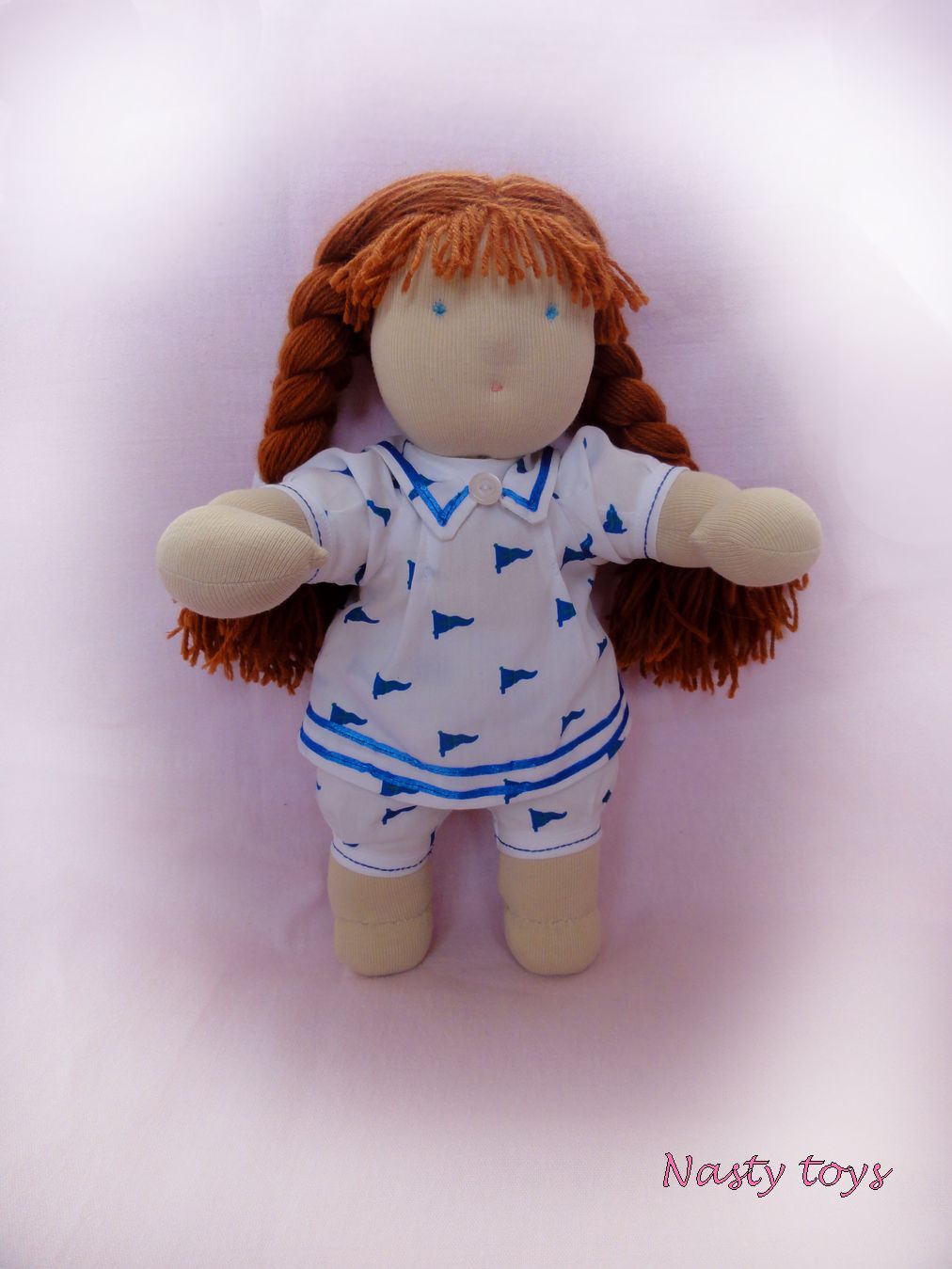
There is a moment I remember clearly: the first time I held a doll stuffed with real sheep's wool instead of polyester filling.
It was heavier than I expected. Warmer. It sat in my hands differently. And it smelled faintly of wool and nothing else. It felt, quite simply, like holding something real.
My First Waldorf Doll
My first Waldorf doll was called Manya. I made her following the old traditions: a body sewn from natural fabrics, stuffing of sheep's wool, and hair that I rooted in one strand at a time so it could be combed and styled like a real child's.
I remember finishing her and feeling something shift. I had been sewing dolls before, but this was different. I wrote later that I had fallen completely in love with Waldorf dolls, and that every single one began to feel like my own child.
Why Materials Matter
The Waldorf philosophy is gentle and considered. A doll should be made from natural materials — cotton, wool, linen, wood — and it should leave room for a child's imagination rather than overwhelming it with detail.
Faces are kept simple on purpose. Softly suggested features invite a child to imagine the doll feeling happy, sleepy, or sad, rather than dictating a single fixed expression.
That idea stayed with me: a doll is not a finished product that ends with the maker. It begins its real life in the hands of a child.
Companions, Comforters, Small Friends
In those years I made many kinds of dolls for children. There were sleep dolls filled with grain and lavender to warm a little one's bed, comfort dolls for newborns, swaddled babies, and tiny dolls in knitted bonnets.
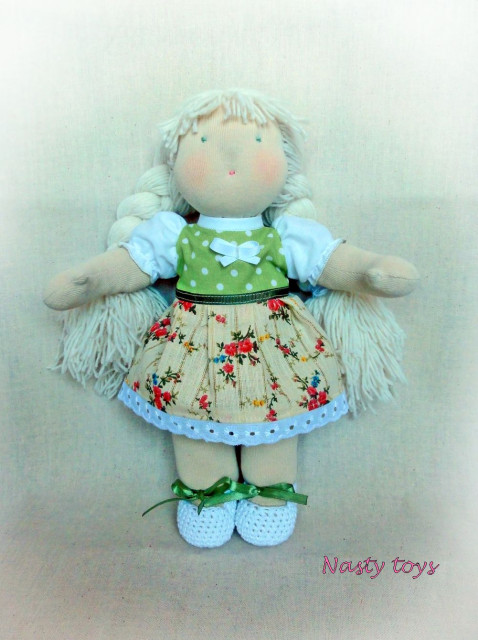
Parents wrote to me about bedtime rituals, about dolls that became inseparable friends, about the comfort of something handmade and warm in a child's everyday life.
Those letters taught me what a doll can be: not a toy so much as a small, steady presence.
What I Carry Forward
I no longer sew dolls from cloth, but I have never forgotten the lessons of the Waldorf years.
I still believe that materials matter, that simplicity has power, and that the truest test of a doll is not how it looks on a shelf but how it feels in someone's hands.
Today, when I sculpt a miniature baby from polymer clay, I am still trying to make the same thing I made with wool and linen all those years ago: something small, warm, and deeply human.
Something small, warm, and deeply human.
Written with love by Anastasia
Handcrafting tiny worlds, one doll at a time.
Ready to Sculpt Your Own OOAK Doll?
Turn curiosity into craft. Follow my step-by-step 44-page PDF and sculpt your own tiny 1:12 scale baby doll from polymer clay.
Explore Further