The Textile Years: From My First Tilda to a Life Changed by Waldorf Dolls
Long before I ever touched polymer clay, I made dolls from fabric, thread, and wool. Those years are the reason I am here today.
My hands have always wanted to make things. In the very beginning, that meant quiet, careful work with cloth: cutting, stitching, stuffing, and watching a soft body slowly take shape in my lap.
The First Tilda
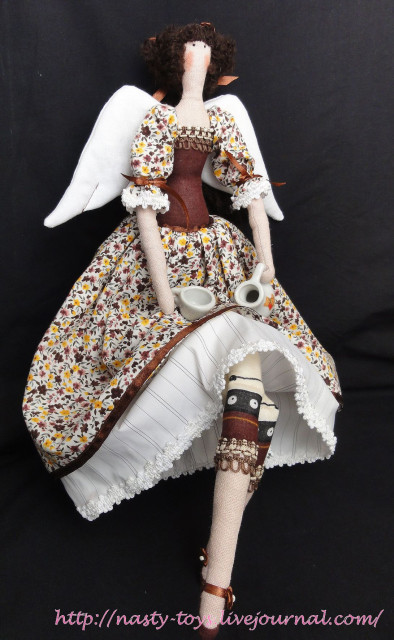
My first Tilda was a coffee fairy. I named her Matilda, partly because she was my first Tilda, and partly because she felt like a proper, slightly prim lady with a spark in her eye.
She stood around 47 centimetres tall, sewn from linen and cotton, with tiny coffee beans tucked into her body and her hair. I remember finishing her and thinking: this is something I made completely with my own hands — and someone, somewhere, will hold it and smile.
Angels and First Experiments
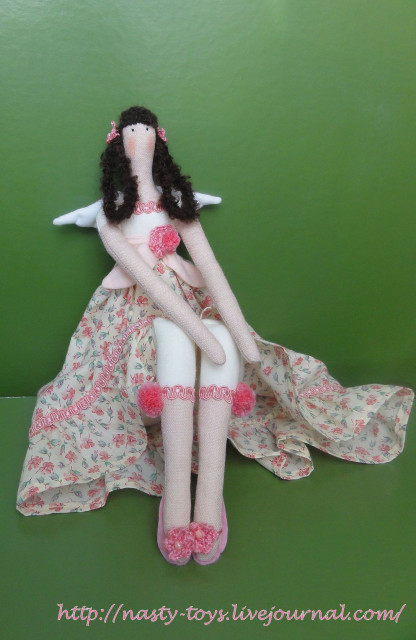
Those early months were full of exploration. I made a vintage angel with real Swarovski crystal wings, a flower-garden angel who became a quiet favourite, a flying cat, a horse with a painted mane, and a lady with a dog whose little companion I shaped from needle-felted wool.
I played with scale, too. Some of my smallest early works were needle-felted animals just three or four centimetres tall. Even then, I was drawn to making things small, careful, and full of detail.
The First Master Classes
Around this time I began to share what I was learning. I wrote my first tutorial on embroidering a doll's face and rooting the hair, and a second, longer master class on a sea fairy who was almost entirely my own invention.
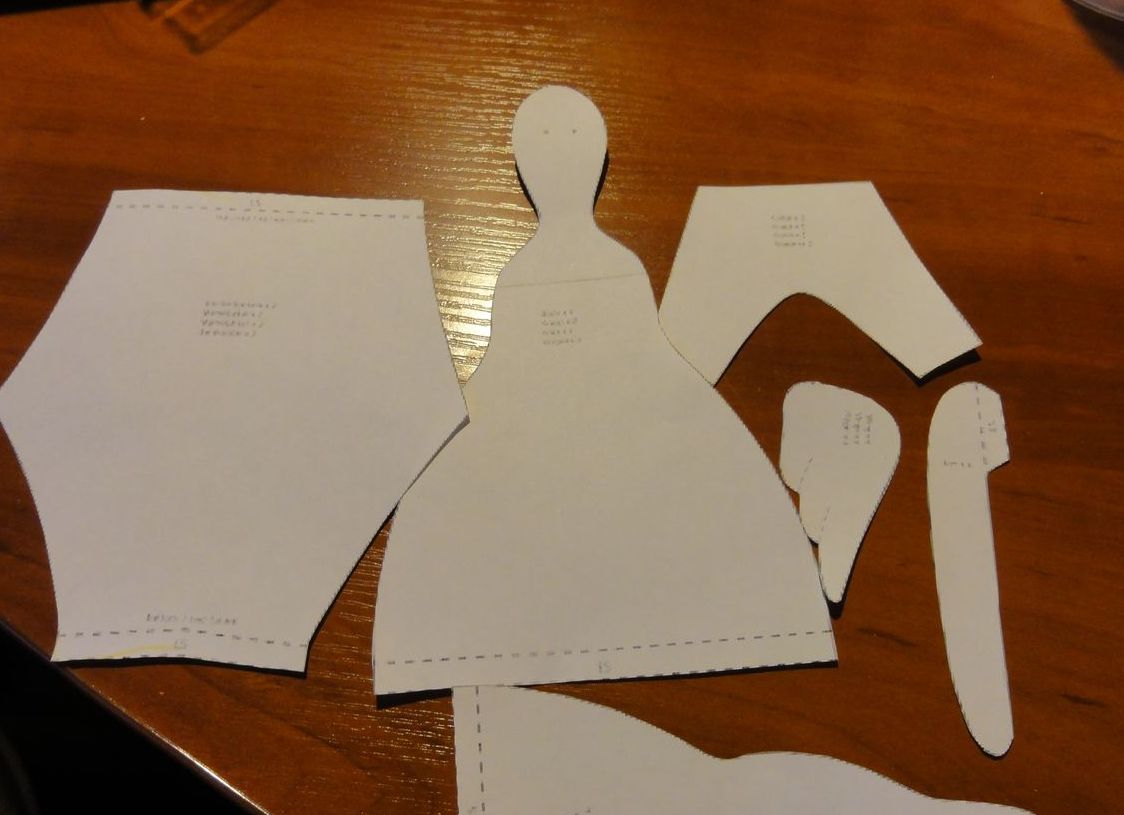
Teaching taught me far more than making alone. Explaining a technique forces you to slow down, notice every step, and understand why it works.
The Turning Point
Then came the dolls that changed everything: my first Waldorf doll, made following the old, gentle traditions — natural fabrics, sheep's-wool stuffing, and hair rooted one strand at a time.
I fell in love completely. A doll stuffed with wool, not synthetic filling, feels alive in a quiet way. It is warm, soft, and somehow present. I wrote at the time that each one began to feel like my own child, and I meant it.
That feeling — that a handmade thing can carry warmth and emotion — never left me. It is the same feeling I still chase today, now in polymer clay, at a scale small enough to hold in the palm of a hand.
That feeling never left me. It is the same warmth I still chase today, in miniature.
Written with love by Anastasia
Handcrafting tiny worlds, one doll at a time.
Ready to Sculpt Your Own OOAK Doll?
Turn curiosity into craft. Follow my step-by-step 44-page PDF and sculpt your own tiny 1:12 scale baby doll from polymer clay.
Explore Further